

Redesigned block explorer transaction viewing interface to clearly show status, direction, and value, reducing confusion and improving retention.
My Role
Product Designer
(Solo, End-to-End Ownership)
Product
Multi-chain blockchain explorer
(Data-heavy Web3 B2C platform)
Stage
Pre-Seed
(Post MVP, closed beta)
Duration
2 Months
Dec 2024 - Jan 2025
Design Maturity
Mid
(Functional foundation in place; systems still evolving)
Primary Objective
Identify the root cause of declining user retention and design an intervention to stabilize repeat engagement before the next major release.
Business Goal
Improve user retention and reduce churn risk in beta.
Metric Under Pressure
Post-activation retention declining; repeat engagement weakening
Core Design Challenge
Diagnose behavioral drop-off and uncover the underlying friction affecting repeat usage.
Outcome
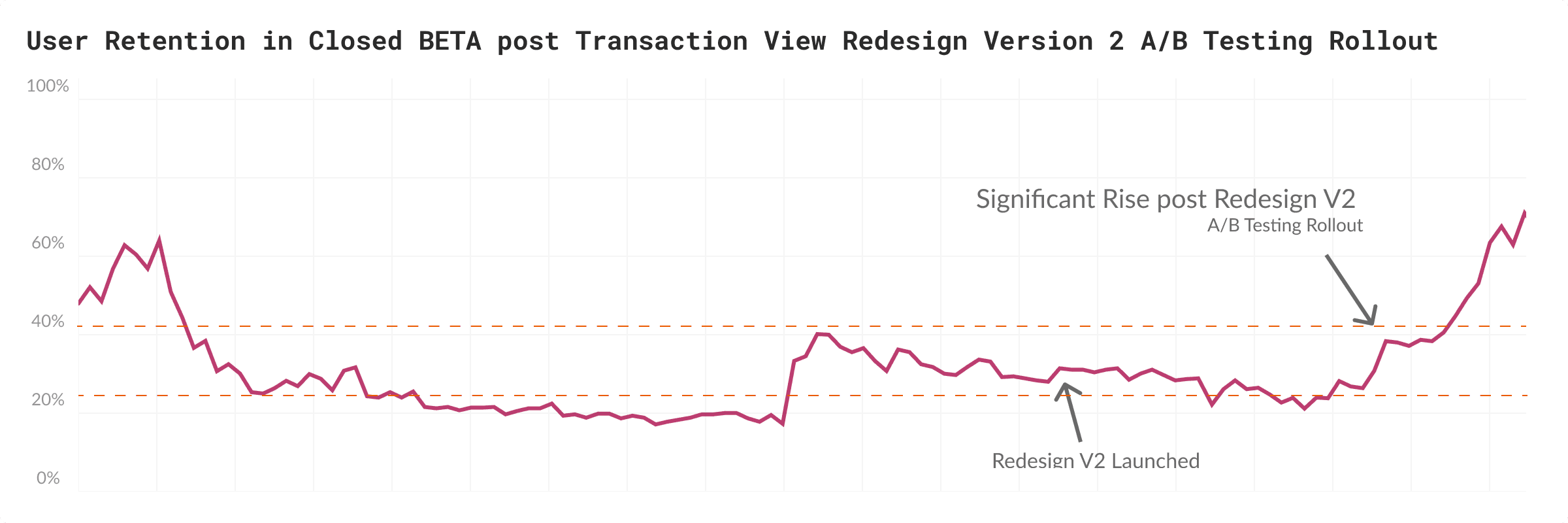
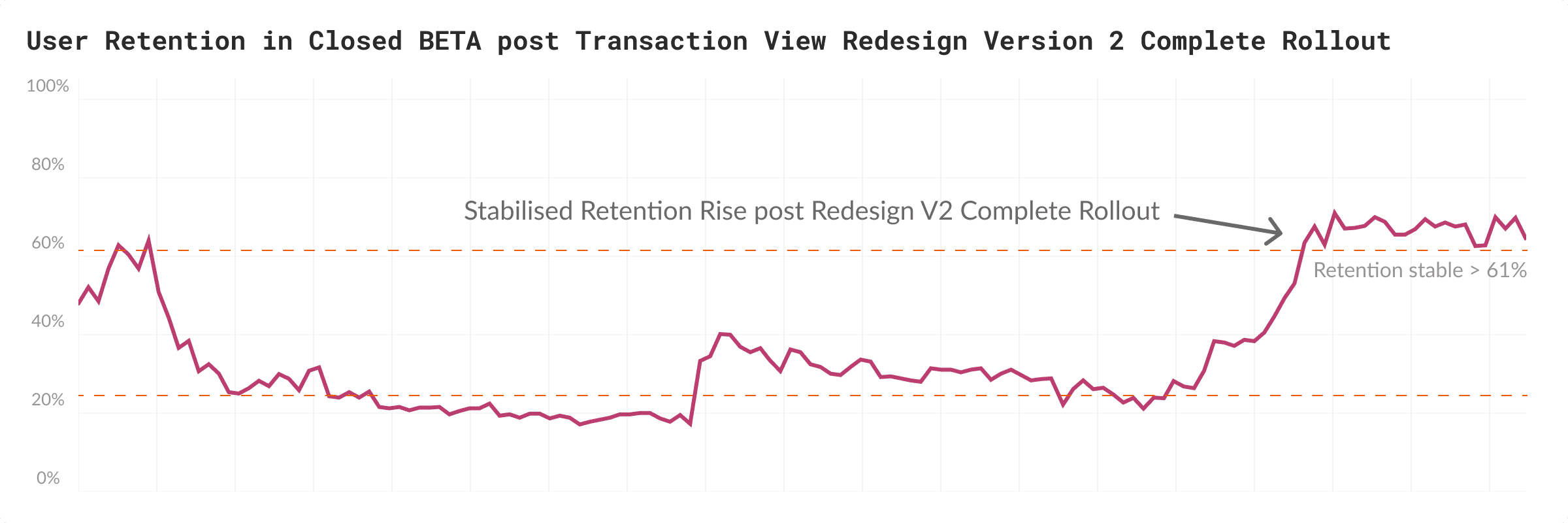
Improved retention from less than 24% to upwards of 61% following intervention.
The Retention Problem
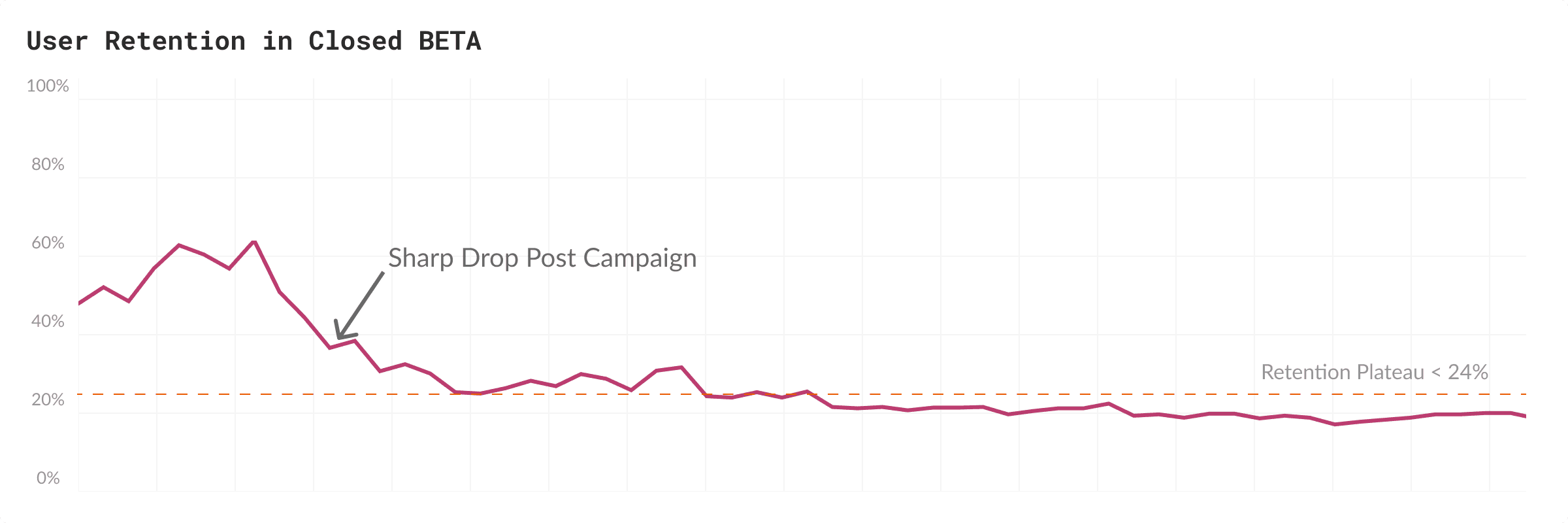
During closed beta, retention plateaued at 24% despite consistent traffic and successful user interactions. Users were coming in, completing their task, and leaving. The drop-off wasn’t happening during onboarding or navigation. It happened after the transaction was viewed.
Product and Business Context
The product functioned as a verification layer integrated with wallets. Most users landed on a transaction page via redirects with one goal to Check what happened to their transaction.
This wasn’t a discovery-driven product. Retention depended on whether users could trust what they saw. With a major feature expansion planned, improving repeat engagement became critical before scaling.
Discovery
Based on my research, users weren’t struggling to use the product, they were struggling to just understand it. I mapped session behavior over a month and observed consistent patterns. To isolate the root cause further, I tested three possibilities.
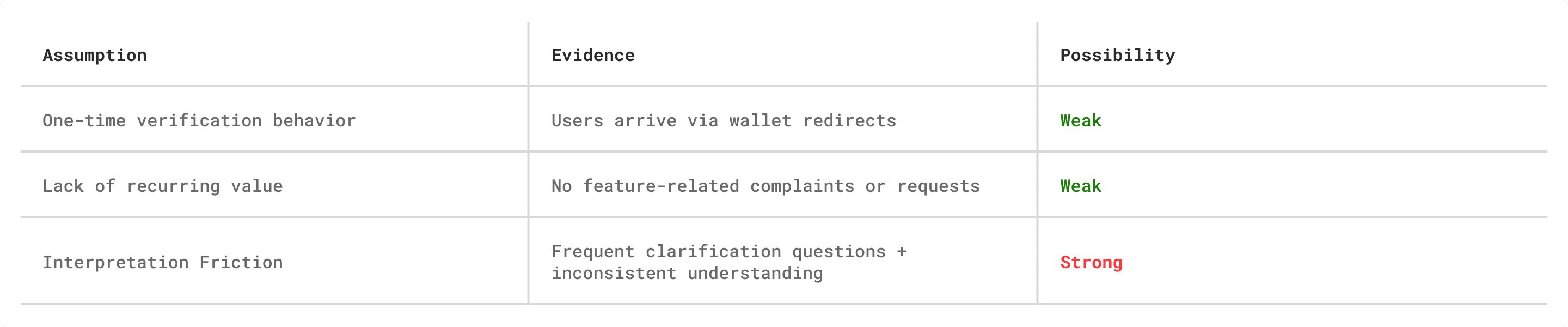
The pattern became clear, users arrived with a specific intent: confirmation. But the interface presented raw, ledger-structured data that required manual decoding. The system was complete, but not immediately understandable.
Ideation
Once I framed the problem, multiple solution directions emerged.

The product team chose a faster, safer approach, improving the existing experience with minimal changes.
I disagreed.
The issue was deeper and had larger implications. I proposed restructuring the experience around outcomes, not raw data.
However, given the constraints, we proceeded with the safer approach.
Redesign v1
After design decision, I shifted focus to documenting and implementing what could be improved within the existing systemwith the given constraints.
I combined the two safer directions, visual refinement and contextual improvements into a single iteration.
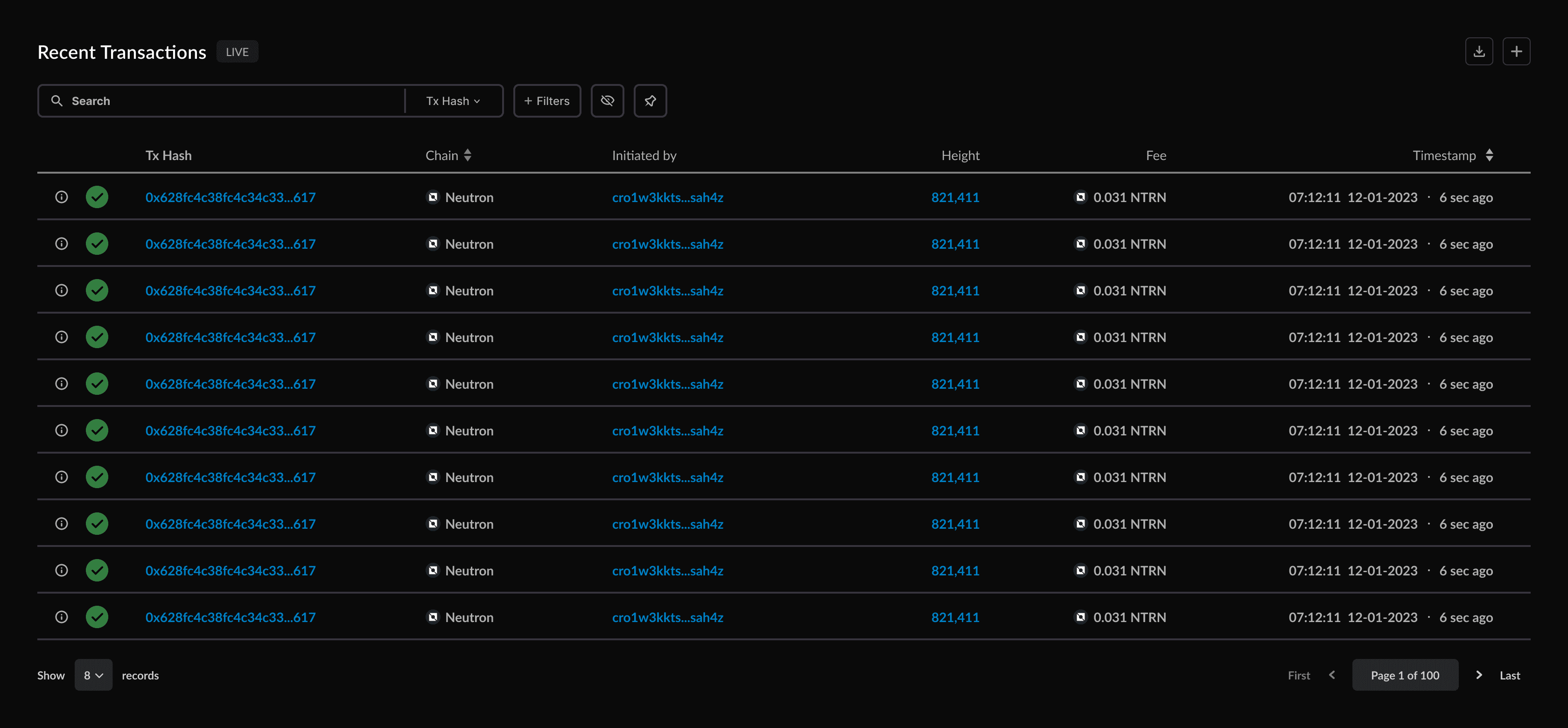
The goal was to make transaction data easier to scan and slightly easier to interpret, without requiring deeper system changes.
Cleaner hierarchy
Better labeling
Reduced visual noise
Improved spacing and grouping
This version was rolled out to a subset of users first to measure behavioral impact.
Transactions View Table Redesign v1
Analytics team found, initial feedback was neutral and, the experience seemed improved.
But behavior didn’t change. Repeat visits didn’t improve in any meaningful way.
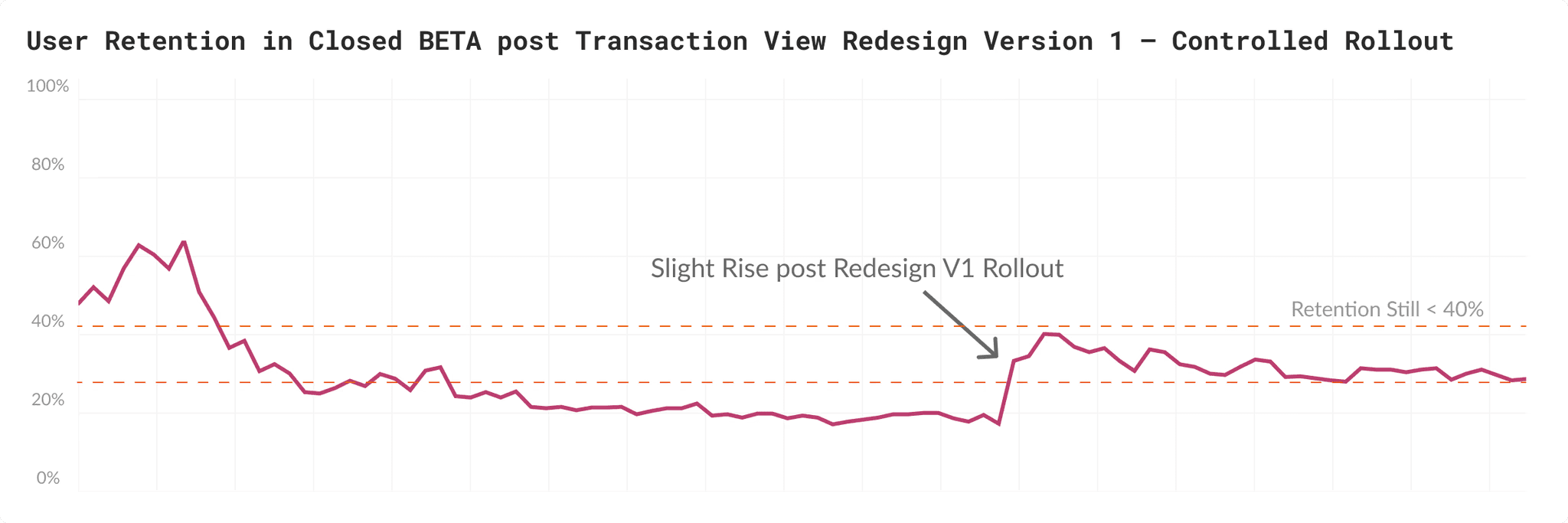
The limited impact of V1 validated my earlier instinct that a deeper, structural approach was needed to drive meaningful impact.
Redesign v2
With limited impact from V1, we returned to the drawring board, restructuring the experience around outcomes.
Instead of replacing V1 immediately, we introduced new version as a parallel rollout in A/B testing style to compare behavior under both approaches.
The focus in this design shifted from presenting data to interpreting it upfront.
Clear outcome framing
Net financial impact
Human-readable action summaries
Condensed status signals
Technical data pushed to secondary layers
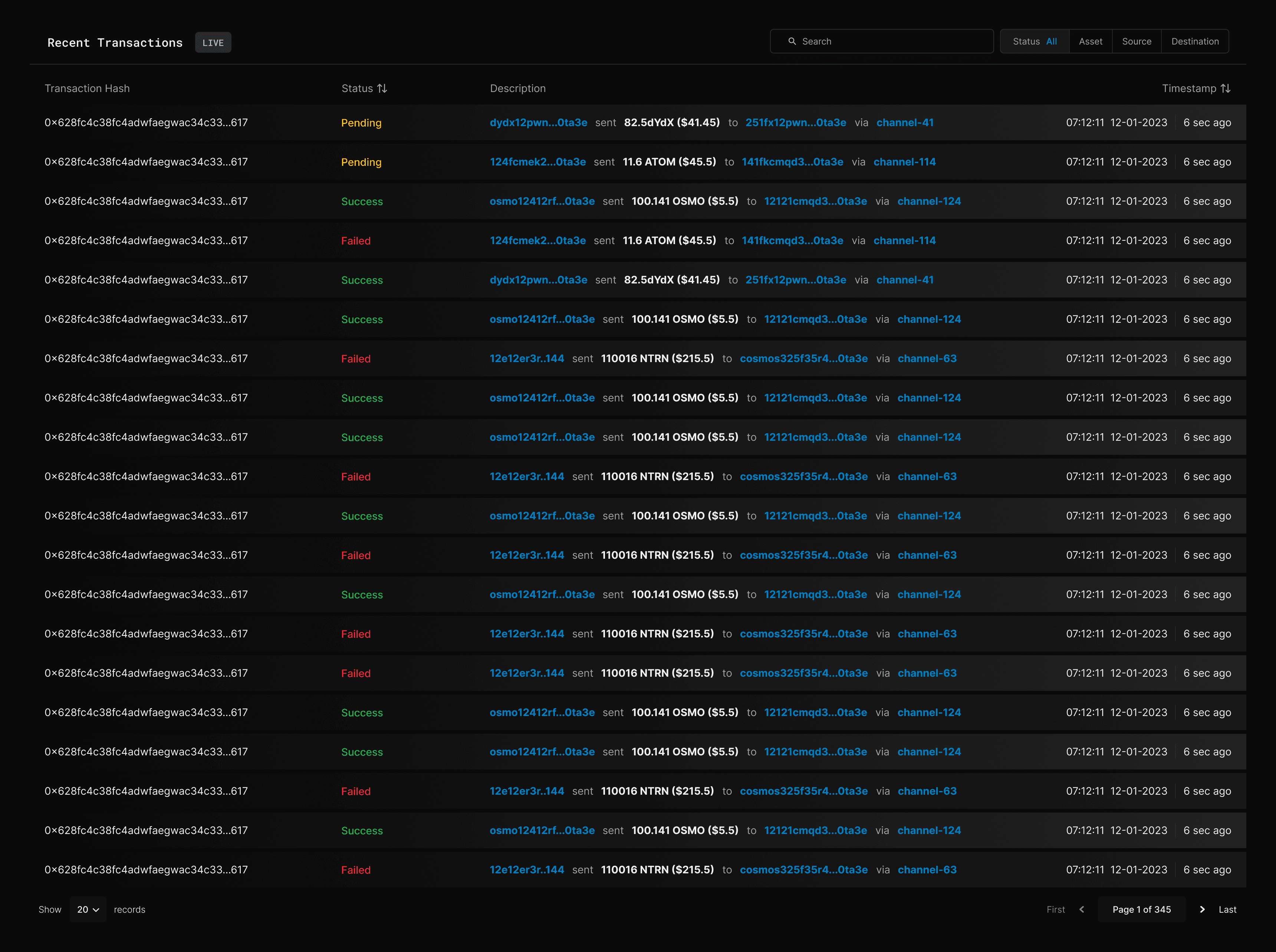
Transactions View Table Redesign v2
What happened
The shift was not immediate, but the results showed a clear shift, retention improved.
Over time, the change held. Repeat visits increased meaningfully, reaching over 60%
Testing and Validation
Before complete rolling out the v2, I and the product team planned to evaluate it through controlled exposure and structured validation.
The objective was to confirm that improvements in comprehension translated into measurable behavioral change not just positive feedback.
Comprehension Validation
To test this, users were shown transaction scenarios and asked outcome-focused questions.
The goal wasn’t to check recall of fields.
It was to check whether they could understand what happened.
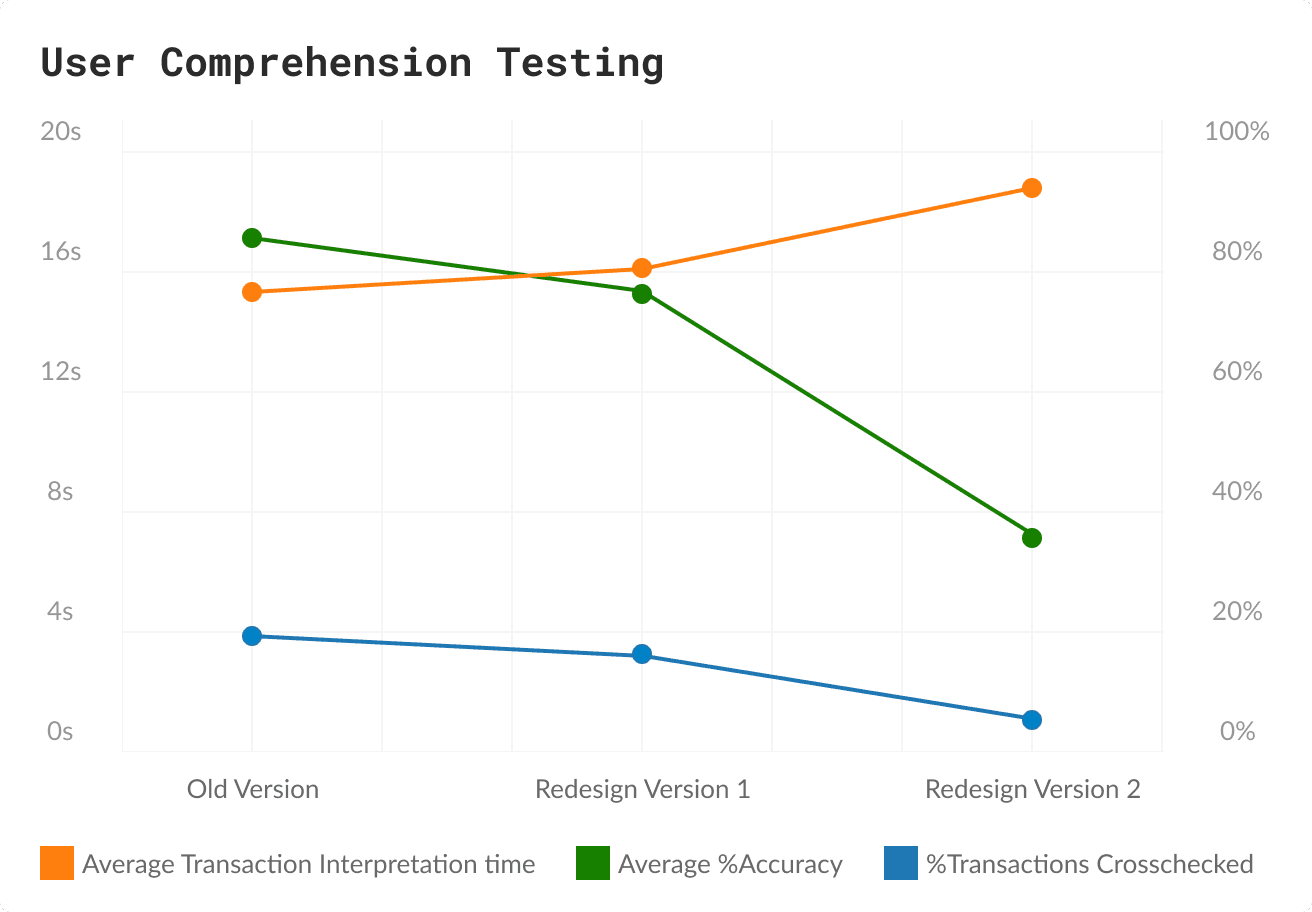
*The left Y-axis (seconds) represents Average Transaction Interpretation Time and the right Y-axis (percentage scale) represents Average Accuracy and % of Transactions Crosschecked.
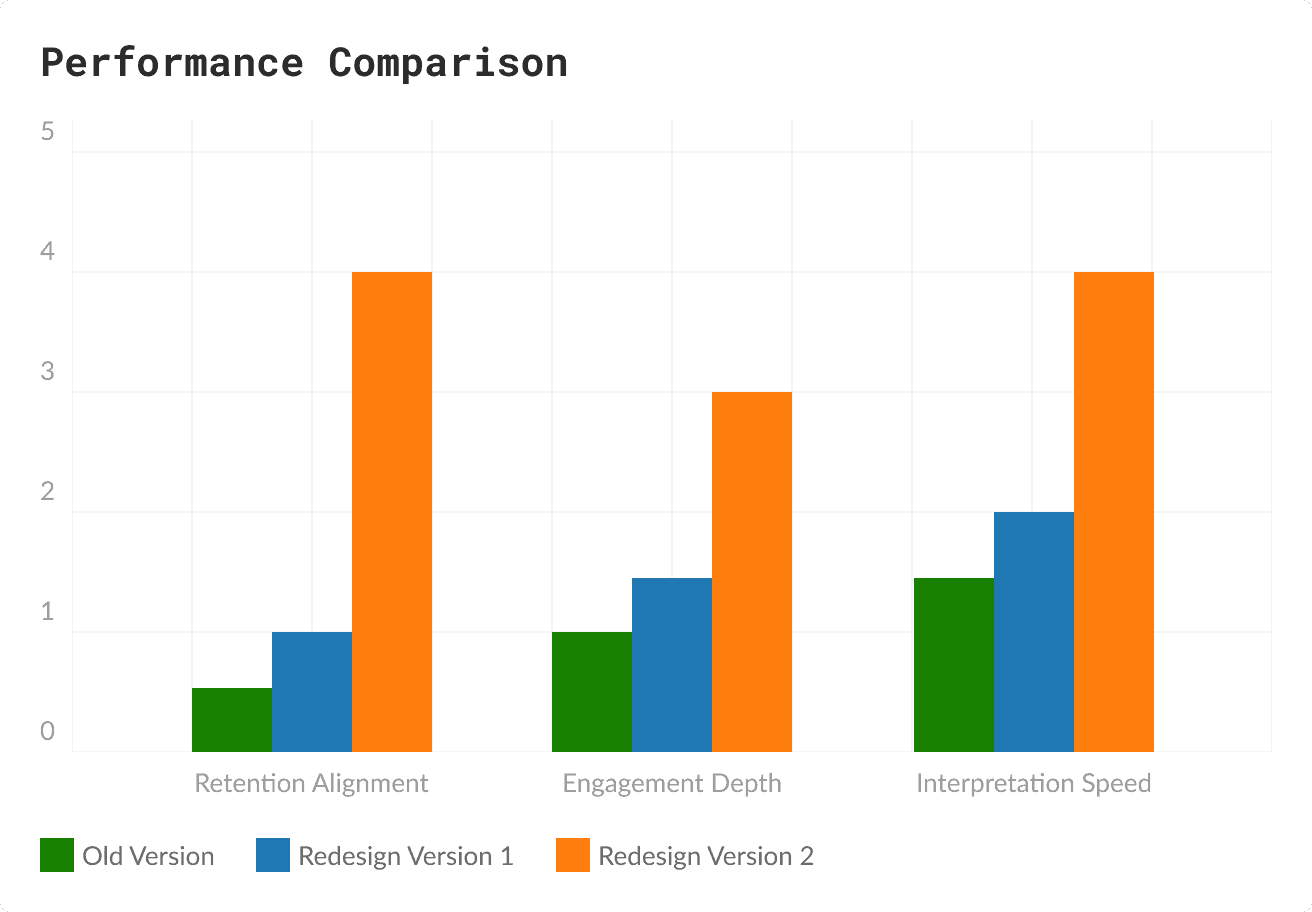
* The Y-axis represents a normalized performance index created to enable clear visual comparison between Version 1 and Version 2 across key behavioral dimensions. The values reflect relative strength, not raw metric percentages.
System Design
With V2 proving effective, my focus shifted from validating the idea to making it work at scale.
On surface level, the model worked well for common transactions. But the system underneath wasn’t built for consistency.
The challenge
Based on my previous understanding, we identified transactions data wasn’t standardized.
We had identified over 2000+ transaction types, each with inconsistent structures and varying levels of complexity. A single summary model couldn’t be hardcoded. It had to adapt.
The next major problem was about building a system that could consistently translate raw blockchain data into understandable outcomes.
What we built
I along with the backend developers, introduced a translation layer between raw data and the interface.
At a glance, this made transactions feel simpler. Underneath, it handled complexity across multiple scenarios.
High-frequency transaction types were prioritized first
Rule-based mappings were created for summary generation
Inconsistent schemas were standardized into a unified structure
Full technical detail remained accessible when needed
The system started behaving predictably. Users didn’t have to relearn how to read different transactions.
The experience stayed consistent, even as complexity increased.
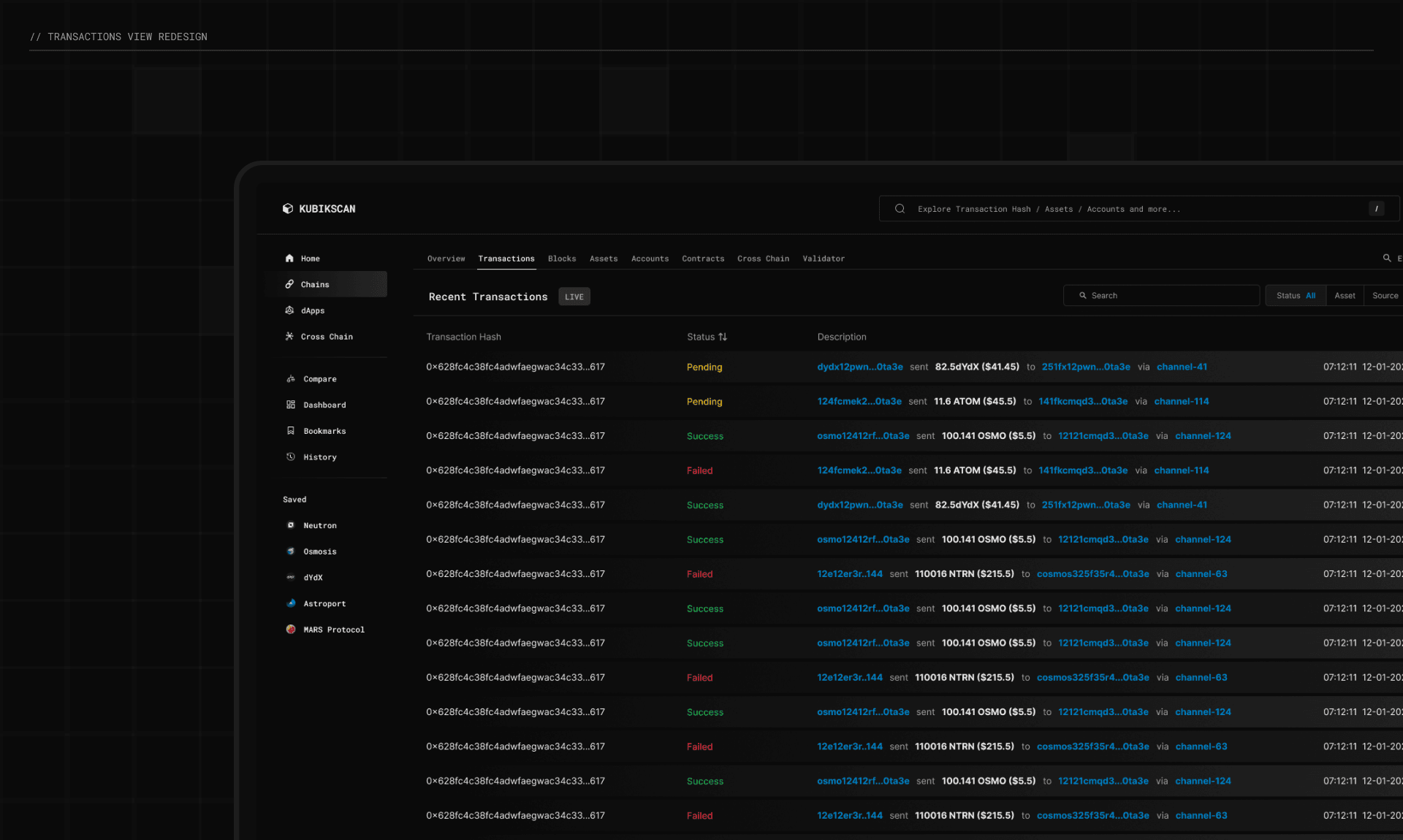
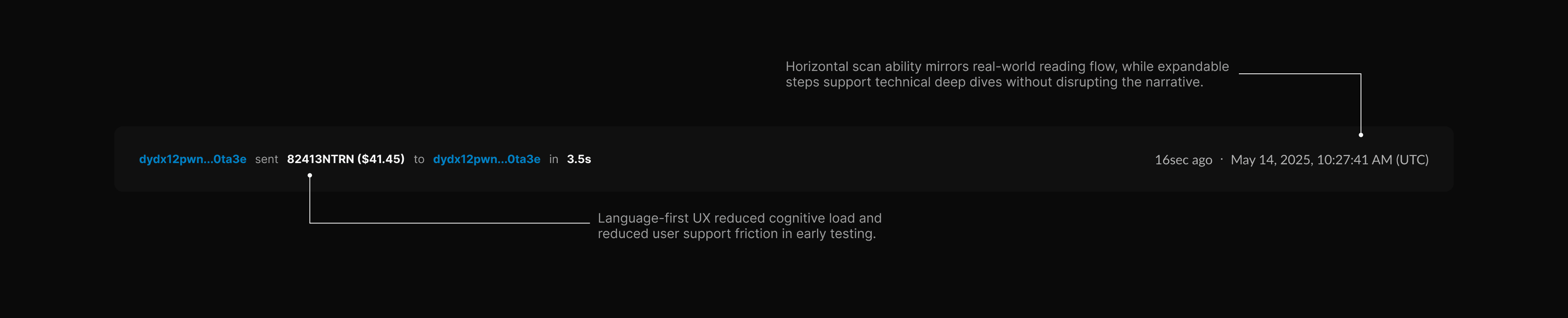
I designed the experience shift from exposing data to explaining outcomes, making sure users could understand what happened.
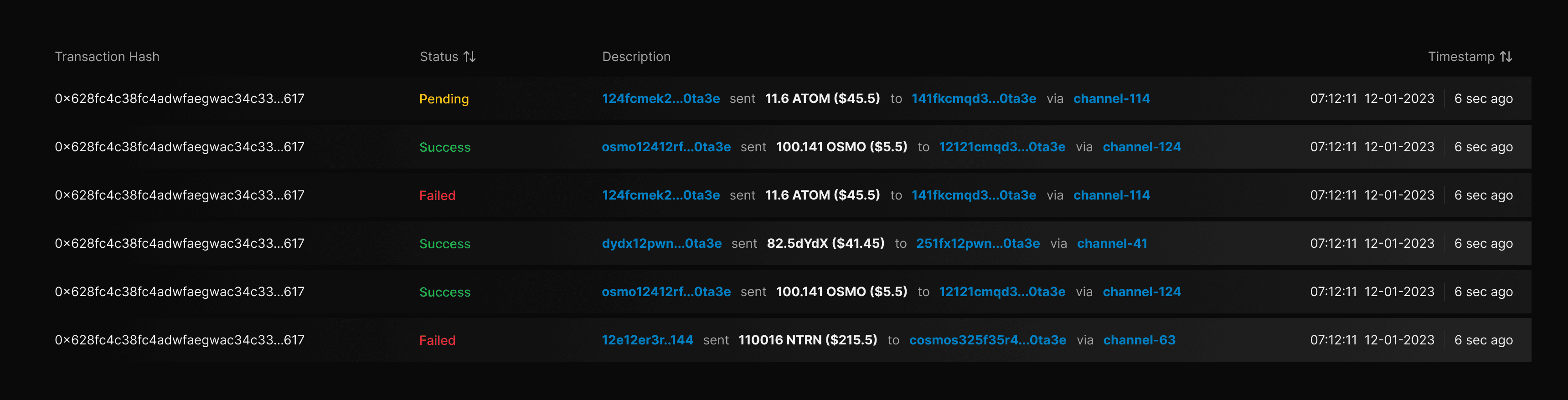
Intent-First Transaction Index
Transactions were reframed around outcomes and value movement.
Users could scan and identify results without opening each entry.
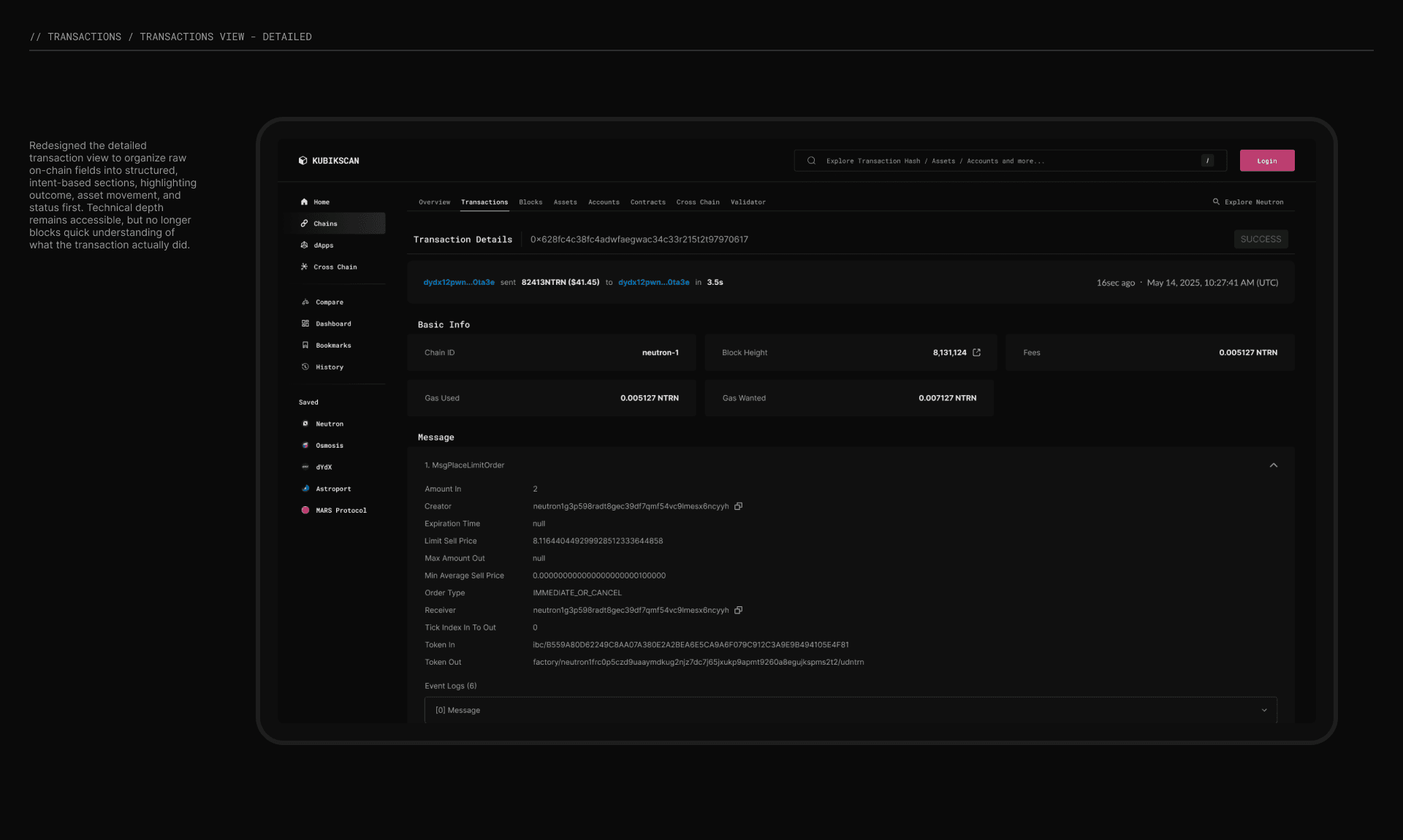
Outcome-Led Transaction Detail
The structure changed from execution-first to outcome-first.
Users saw what happened before how it happened.
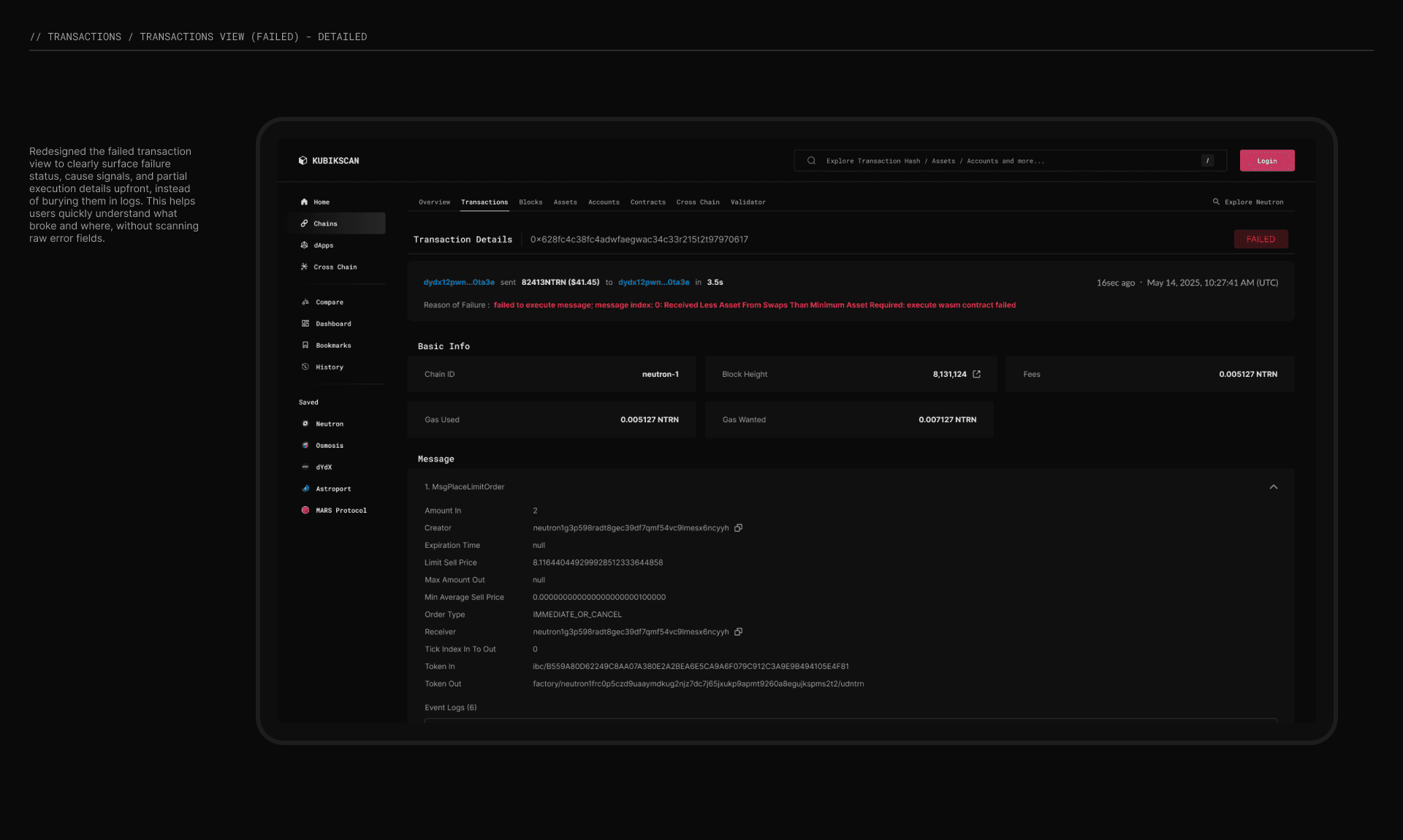
Failures were no longer ambiguous.
Clear reasons were surfaced upfront.
Users could understand what went wrong without decoding logs.

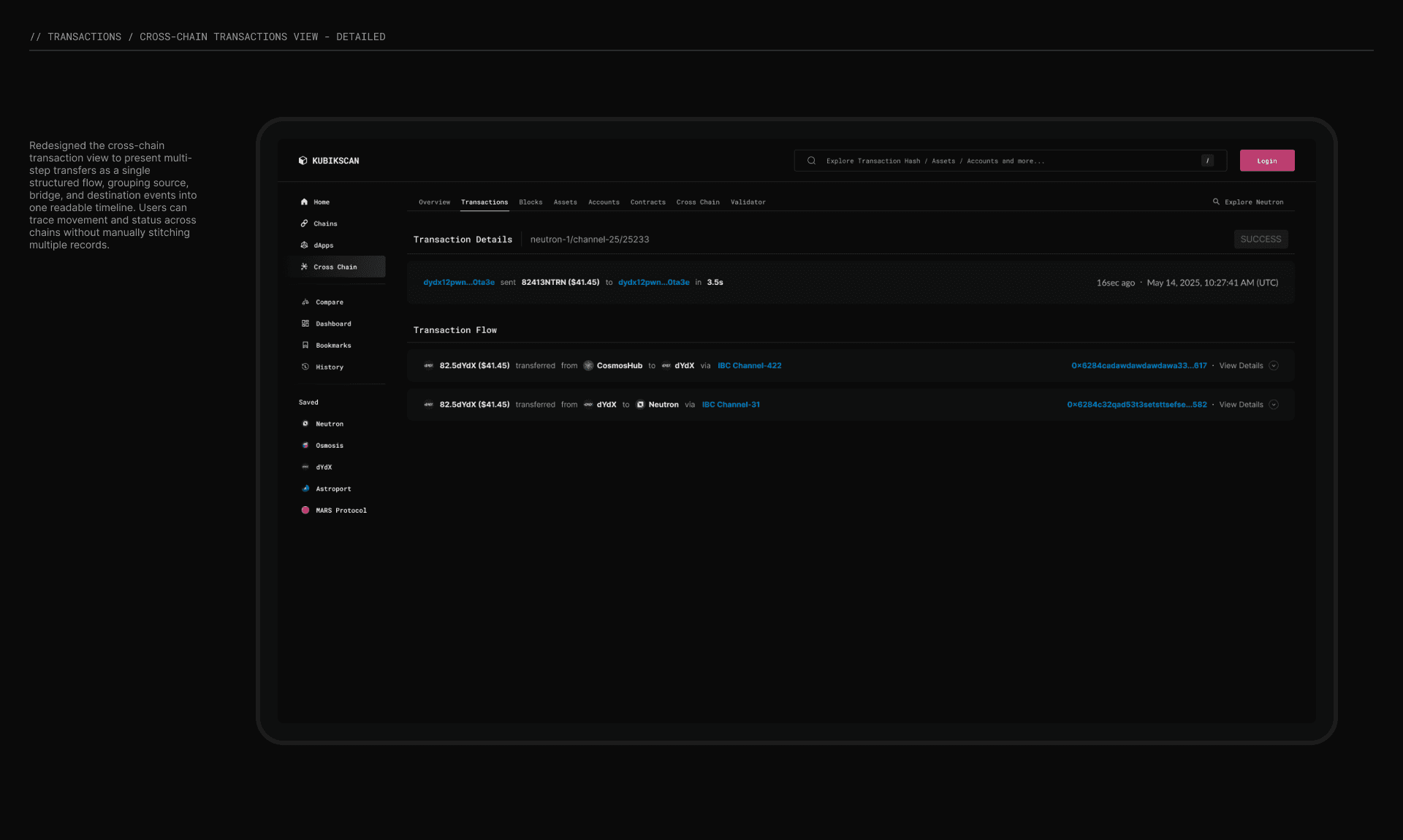
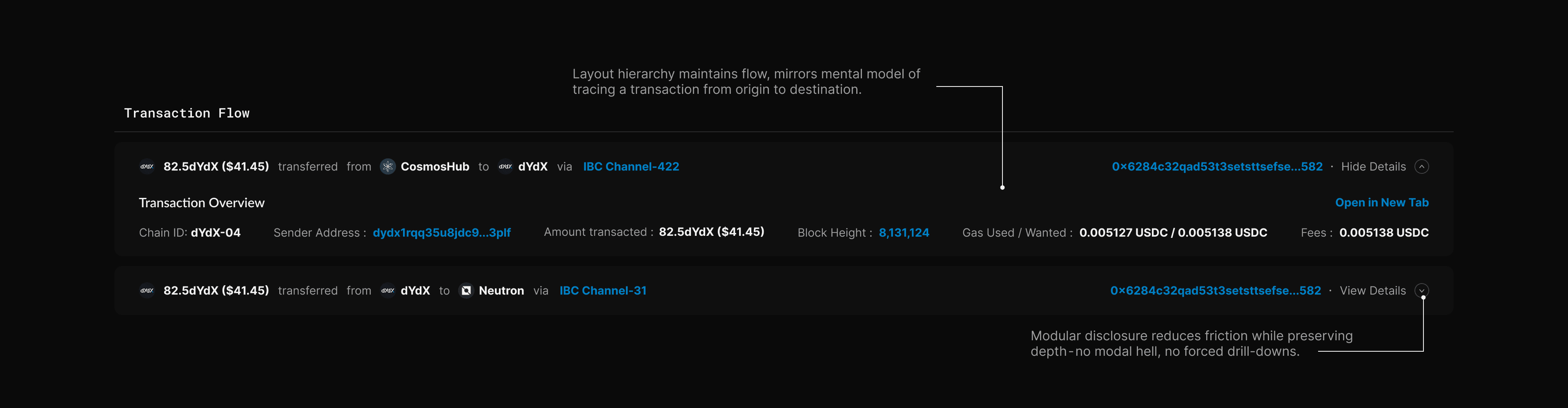
Unified Cross-Chain Flow
Multi-step flows were grouped into a single narrative.
Users no longer had to correlate across chains manually.
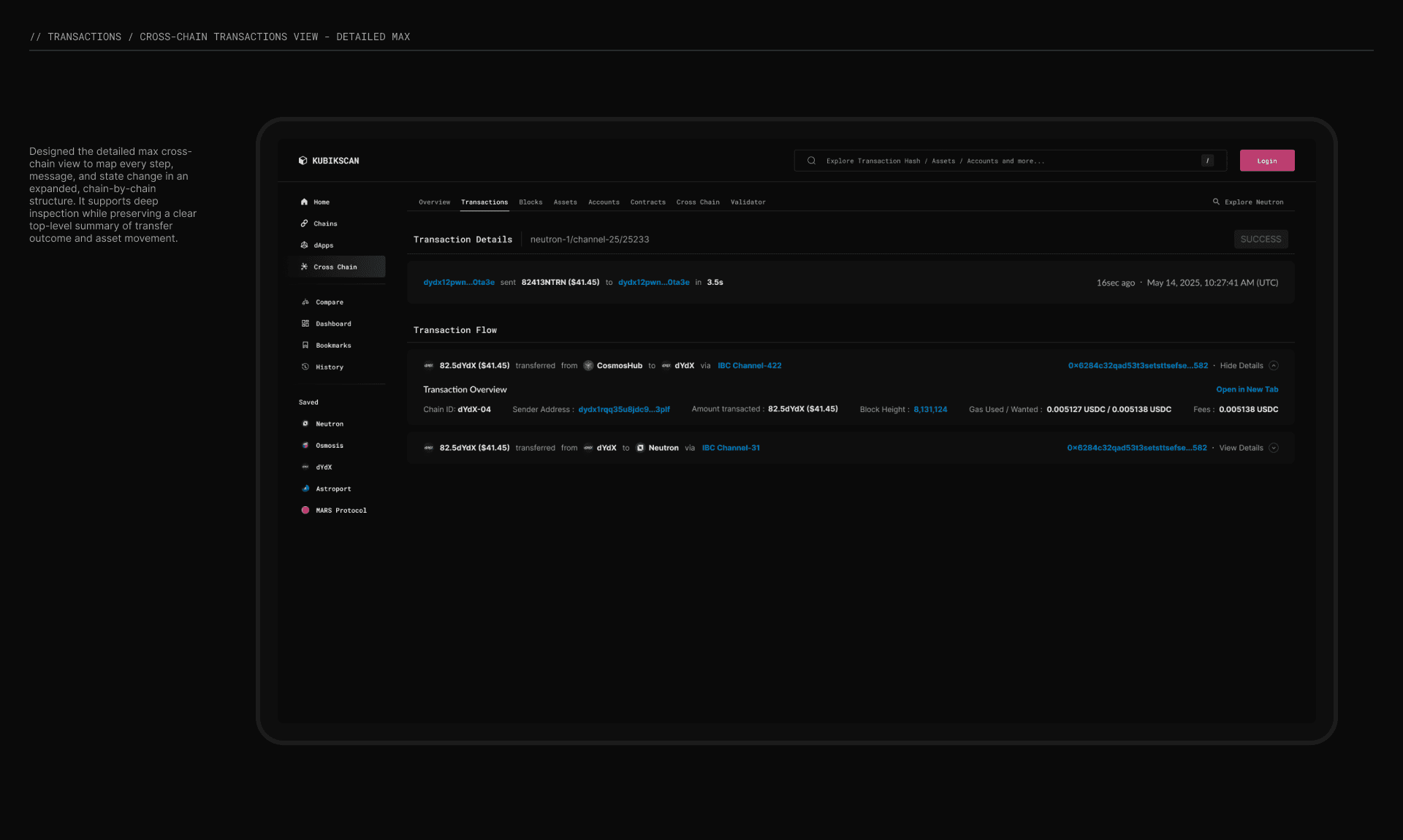
Progressive Deep Inspection
Technical depth was preserved.
But it no longer blocked basic understanding.
Users could expand only when needed.
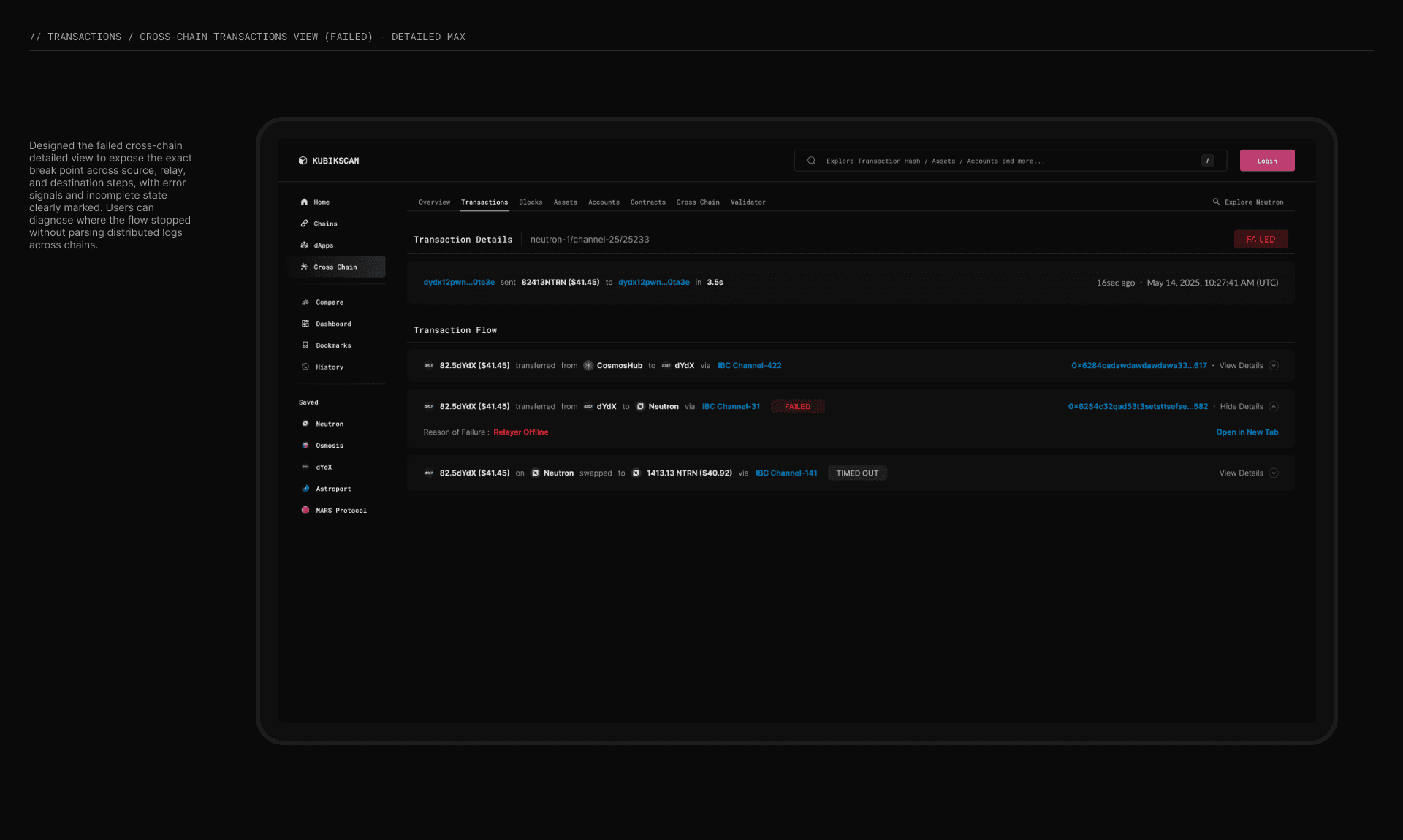
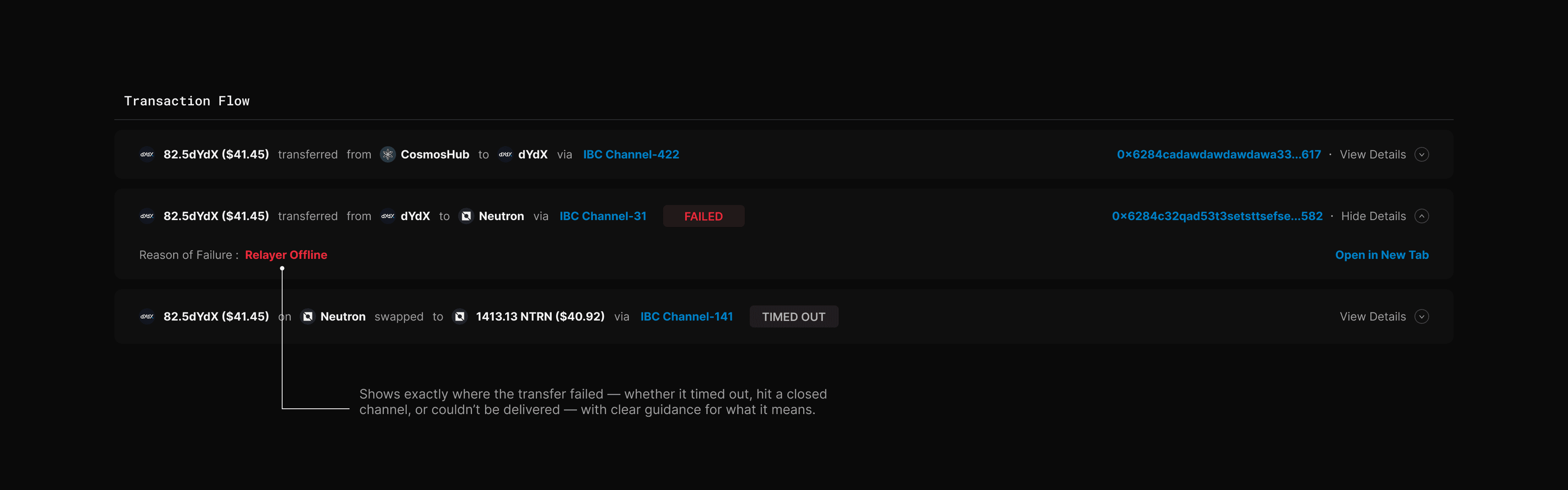
Step-Level Failure Localization
Pinpointed the exact breakdown in cross-chain flows.
Users could accelerate diagnosis.
Converted distributed technical failure into a clearly scoped event.
Behavioral Impact
With broader rollout, the shift became more visible, we observed the engagement looked healthier.
But more importantly, behavior changed.
Repeat visits to transaction pages increased
Back-and-forth scanning reduced
Interaction became more direct and intentional
Business Implications
By improving transaction clarity,
Trust in the platform increased during a critical beta phase
Partnered wallet traffic converted into repeat users more effectively
The product stabilized before expanding feature scope
The intervention reduced churn risk at a structurally sensitive moment in the product lifecycle and strengthened the foundation for future growth.